
Wakayama Shiozu Oyster and Seafood Information
October 15 , 2026, Sea surface temperature 26℃
10月15日
ヒラムシのやろ~~~~
こんな感じで剥がし作業が始まりました。
知ってましたか!1匹のヒムシは何と1日で18個以上の牡蠣を食べるらしいです。
小さく剥がれないのは残って生きていますが、育ちだしたねの見ると嬉しいサイズは口が開いて中が真っ白です😢
1プレートに8匹ほどのヒラちゃんを何枚かのプレートで確認すれば、数日で1連は全滅です。
何と悲しいことが確認できたのでしょうか😢😢😢
これはヤバイ緊急事態と分かっていますが、一人では⤵⤵⤵
回収した生きてる牡蠣はな水に5分ほど浸けて完全ヒラ虫駆除をしてクラス分けを行い新しい住処のバスケットにGoです。
元気に大きく育てよ~~(^^♪
October 14th Today, the baskets on the rafts started to get clogged with oyster seeds, so we started using the washing machine!
The oysters inside are growing well, and as you can see, those tiny oysters from the first batch are now big!
It gets this clean after washing.
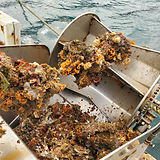
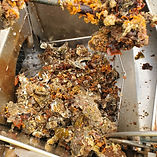
1. Clogged basket 2. Seeds growing well 3. Clean basket
4. There are 10 small ones in the bottom right. Now, how many are in this box?


The diploid oyster spat I collected were very thin when I peeled them off the husk, but in just a month and a half they grew into plump, round oysters. It really feels like I'm doing single-seed oyster farming now.
Another new discovery in aquaculture! Definitely adding this to my secret guide!!

October 13th, those flatworms...
It's being eaten.
Today was better than yesterday, but I still ate quite a lot.
It's sad, but we're doing our best to recover as many as we can.
I will spare no effort to secure a bright future.
October 12th Hey oyster hut owner!! Hi!!
And that's when we boarded the boat to go to the raft.
If you look closely, you'll see regulars enjoying a barbecue on the embankment.
What time does it start this year?
We started farming on a new raft, so things were a bit disorganized, and in January, over the New Year,
Yes!! A new one has appeared, I'll have to come twice (lol)
I'll definitely come back anytime, enjoying it 200%!
The weather was great during this long weekend, and at my age, my face is so tanned that you can't tell the front from the back.
I spent today working alone in the shed, collecting juvenile shellfish.
With each subsequent check, the number of flatworms observed increased, and the damage caused by feeding on the plants spread considerably throughout the area.
This requires frequent maintenance of the raft's floating and sinking processes.
October 11th: We started the day off right by surfacing the raft!
Thanks to changing the orientation of the floats and rerouting the intake and exhaust lines, the raft now moves exactly as I wanted.
How wonderful! I was feeling a bit down because the modifications weren't going well, and I was only going there occasionally, but now everything's fine.
Next, I looked into a basket with a lot of attached organisms (oyster seeds) and found many growing individuals, so I opened the lid and checked them right there. The smaller triploid ones were starting to grow one by one.
Thinking this, I checked the basket of the larger plants, and they are growing well.
I'm hoping it'll be a decent size by the end of the year!!
The day after yesterday's shocking pest damage, I started peeling them off with a grim feeling. There were some bad ones, but it was all manageable, so I was relieved.
I'll do my best again tomorrow!!
10月10日
なんじゃこれは!!
本日も少しでも種を剥がそうと陸に持ち帰り食害防止ネットを取りプレートから剥がそうと見てみると何時もとなんか感じが違う、何が違うのか眼鏡を外していたのでわからなく、じっくり見てみると。キャ~~~~~
全部口が開き死んでる!
どのプレートを見ても。
3枚目のプレートを確認してみると、発見!!
大量のヒラ虫が牡蠣に覆いかぶさり呼吸で開いた殻の隙間から中に侵入し食べていました。
この連はほぼ全滅でトホホ⤵⤵
今までの牡蠣も結構な数が死んでいたのはこれが原因ではと、少し養殖状況と養殖法を照らし合わせて調査してみます。
同じ海のほぼ同じエリアで採苗した牡蠣の種が、一方は死滅や被害ゼロ。違う塊は食害や変死がある。また本日剥がし作業をしたうちの1連は全滅。
これを解明すればここ塩津での牡蠣の生産量が飛躍的に良くなるはずです。
1-ヒラ虫大量付着 2-ほぼ殻が開き死んでいる 3-1連でたったこれだけ


October 5th
I peeled it off!!
A total of five consecutive ones.
Some groups had absolutely no oysters left, but they persevered and won.
Since I was alone, I thought I wouldn't have anything to talk about, so I jumped into the radio and had fun by myself.
It's surprisingly fun! (laughs)


October 4th
These are the seeds we obtained from the second spat collection at the beginning of August. They are growing well and will become good oysters, so we are looking forward to their future.


October 2nd, I failed~~
As you can see, my boots are completely soaked.
The water temperature is starting to get quite cold.
I put my body on the line to confirm it.
No matter how old you get, being from Kansai is tough~~ (lol)

September 29th. Yesterday was a hectic day from morning till night.
The morning begins with a measurement survey, followed by bringing back plates grown from longlines and removing them.
A float maker came along and repaired the flat tire midway through the ride. 😢
During the process, the Kushimoto Fisheries Research Station accompanied them for a large-scale inspection survey, investigating all aspects of oyster farming, from the offshore longline fishing points to the rafts and water pumping areas, and also surveying the growth status of the oysters.
Some things are going smoothly, but any areas where we've been even slightly careless have affected our growth.
Currently, I'm doing almost all the work by myself, but I'm working hard while wishing I had three more pairs of hands.
①This is how much we managed to collect in this series of events.
②They are attached to the plate like this, and if you look closely ③there are shells like this mixed in, which are troublesome because they spin threads and stick to the surrounding objects.
The surrounding oysters' seeds become entangled in the threads, forming a clump that prevents them from breathing, causing them to die.
We have to be very careful during this round, because they grow several times faster than oysters. We use our eyes like a magnifying glass to carefully spot and remove even the smallest ones.
It's so suffocating, so that's another one of those haaaaa (lol).


September 27th It's torn~~~
The way it's torn suggests it was caused by friction against the insect damage prevention net.
No oysters fell off the plate and we were unable to recover them. 😢
The oysters on the top of the plate were almost completely gone, with only a few seeds remaining on the underside.
The recovery rate is less than 10% of the normal rate 😢😢😢
Although they weren't torn, there were quite a few larger seeds inside that were dead and gaping open in some of the clusters. As I carefully peeled them off, I found a considerable number of flatworms attached to them, confirming that they were responsible. Damn it!!!
In this new aquaculture challenge, we've uncovered three reasons for the mysterious deaths that were previously unexplained in the last two months!!!
Today I held a strategy meeting by myself for about an hour. 😢
1. Protective net torn. 2. Protective net torn. 3, 4. Shedding and insect damage. 5. Normal condition.


On September 26th, the weather remained cloudy until 2 PM, allowing me to get more work done than usual.
Oyster spat collection is still possible, and the levels were confirmed to be fine until yesterday.
The seeds I brought home have grown well, and the bowls I collect them in quickly fill up as I peel them off the plates.
It's growing well and has improved significantly compared to when it first started.
Before putting them in the boxes, sort them by size, and the larger ones go into the boxes and are sent out to sea for longline fishing!
Grow up with plenty of nutrients!
Before the rain started, we dismantled the oyster rafts that had served us well for the past four years.
The bamboo was becoming sparse and starting to split, so I decided to replace it with a new raft, and I painstakingly dismantled it by myself.


September 24th: A calm day, and we managed to separate two baskets of oysters.
The survey still found many seeds, and the number of seedlings that can be collected is still large.
This place, Shiozu, is a miracle spot that we only discovered after doing some research!

September 23rd: It's become calm!
After conducting surveys of plankton and other organisms using longlines, and finally being able to remove the longlines, we check the plates attached to them.
First, we take one plate from a well-grown row and collect the shellfish that have naturally detached from the plate and accumulated in the net to check the percentage of shellfish that have naturally detached.
Surprisingly, about half of the shells we removed fell off and we were able to collect them with a net.
Without the nets to prevent damage from predators, a large number of shellfish would be eaten or simply fall off and disappear, so we are very grateful for the nets.


September 22nd. Due to the strong winds from the typhoon, we can't go out to sea for longline fishing, so we can't shuck the second batch of oysters. I'd like to put the oysters for this season into baskets soon to let them grow big and plump, but I'm working alone and can't keep up 😿 I wish I had an extra pair of hands.
I opened a few to check their growth and how much fruit they had.
If you separate them, they'll grow bigger from here; it looks like they've already started to bear fruit.
It seems to be starting to turn a little whiter. I have high hopes!!!


September 21st. The wind is strong due to the typhoon.
I had been waiting for this long weekend to harvest the oysters that had grown on the longlines offshore, but the waves are too high, so I've started meticulously tending to the oysters in the baskets instead.
The other shellfish that produce threads, besides oysters, were gathering together and forming clumps, so it was the perfect time for maintenance.
Larger oysters are easier, but...
You'll need a big magnifying glass for this! (lol)


September 13th. This is unexpected joy.
They grow quickly, and even Umino-san from Tokushima, who provides us with triploid specimens, commented on their size. (Right photo: 5mm received on July 30th, currently up to 40mm)
The diploid seeds I collected locally are doing well, and I'm really looking forward to seeing how they develop.
(Left photo: Seedling collected on July 15th; currently ~40mm)


August 28th. Despite the heat today, we were busy sorting oysters by size, shucking them, and washing any dirty baskets.
The oysters collected using the OK Plate are growing much faster than expected, and individuals that have grown to over 2 centimeters are detaching due to the impact and weight.
In this situation, even though we started collecting seedlings as a measure against global warming, 90% of them will fall off.
It's my first time doing this kind of work, so I'm clumsy every day, but I'll do my best to at least try my best.

On August 25th, a large quantity of oyster seeds were harvested from the sea off Shiozu.
As the first phase of climate change-resistant oyster farming that began in April, in addition to triploid oyster farming, which is seeing an increase in producers in Japan, we are conducting a demonstration experiment of oyster farming that is more resilient to warming seas by collecting diploid seed oysters from local oysters in the waters off Shiozu. The first photo shows seed oysters from local oysters. Initially, they were about the size of a pinhole, but they grew to about 2 cm in one month.
From here, we peel them off and transfer each individual to a basket to begin cultivation. Grow big and delicious! 💗


July 26th. July is almost over.
Two weeks after deploying the OK plate, we successfully collected spat offshore.
The real fun starts now! Locally born and raised oysters will begin spawning all at once.
July 2nd Today we held a training session on how to use the Oyster Navi developed by Chugoku Electric Power Company.
1. Collect plankton from the sea.


2. Pre-processing for photographing plankton


3. When you take a picture, lots of them will be in the photo.
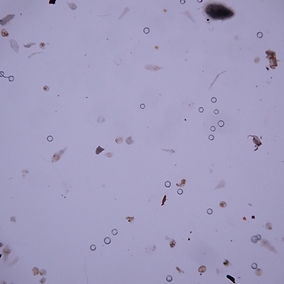
4. The test results will be ready in 5 minutes!

It started on May 17th!!
Experiments with new oyster farming methods to cope with global warming.
The futuristic raft is currently under construction, and after assembling the OK plates to be used for oyster farming using local oyster spat, we have started soaking them in seawater for about three weeks to remove any impurities.
It starts with preparing each rope to the same length, which is a time-consuming task.
If this step isn't completed, the oyster seed's establishment will be extremely poor, making it the first necessary step for collecting and cultivating a large quantity of delicious oyster seeds.

May 6th: The oyster hut has closed for the season.
Thank you very much to all the customers who visited our store.
The next season is scheduled to open in December.
Please look forward to it.
May 4th. Tomorrow is the last day of the season.
This season too, many customers have told us that the oysters here are small but incredibly delicious.
I received kind words.
We will be introducing a new oyster farming system for next season and working hard to improve the taste level.
Today, in the middle of business hours, I went to the offshore longline fishing grounds to collect wakame seaweed for shabu-shabu, which is used in miso soup.
The waves were pretty high today! 🌊
Even at night, there's still a fair amount of wind blowing, so I'm a little worried about harvesting the seaweed first thing in the morning.
May 1st - From tomorrow until the 5th, we'll be holding our " Last Festival " using the last Shiozu MAX oysters of the season !!
Enjoy the plump and melt-in-your-mouth Shiozu oysters.

Oyster Hut Tatei Suisan
Shiozu Fishing Port, Kainan City, Wakayama Prefecture
April 28th. Thank you to all the customers who visited us this season.
For the next season, we will be incorporating new aquaculture methods, and from next season onwards, we will be showcasing oysters grown using both our existing methods and those cultivated with the new methods.
From here on, with a fresh start, we will cultivate even more wonderful and unique oysters for everyone to enjoy, and to make the name of our oyster hut more familiar to everyone, we will change it to "Oyster Hut Tachi-chan" .
April 28
Due to popular demand, the apprentice vs. master taste test will continue until the very end!
Enjoy the ultimate sweetness of Wakayama, available only during this season!!
Although they are the same species, you can enjoy the completely different tastes of oysters depending on the growing period and the region where they are grown (^^♪

April 24th. The oysters are in April, and the wakame seaweed has started growing a little later. Oysters in a hot pot with wakame shabu-shabu on the side is the best!!

On April 21st, the temperature across Osaka Bay was also 17 degrees Celsius, indicating a stable temperature of 17°C.
The Kuroshio Current has returned to its old, stable flow, so this year, for the first time in several years, we're starting to see glimpses of the fish we used to catch. Since we're starting to see horse mackerel, we can expect to see mackerel and hairtail soon!

April 20th: We received our second red tide warning of the day.
Wakayama Prefecture Red Tide Report (April 20)
Noctiluca scintillans, a plankton that causes red tides, has been confirmed in the northern part of the Kii Channel. Fishermen should pay attention to the discoloration of the seawater and take measures to prevent damage to aquaculture and other crops.
1. Occurrence
Date and time of occurrence
Monday, April 20, 2020 12:50 p.m.
Area of occurrence
Northern Kii Channel (off the coast of Wakayama Port): Approximately 20m x 1,500m
(Distributed sporadically along the tidal currents. The above is the total length when the stripes are joined together.)
Plankton species and density
Noctiluca Scintirance 910 cells/mL
Applicable to warnings and advisories
―
Whether or not damage occurred
As of April 20, 2026, no damage to fisheries has been confirmed.
others
Water temperature: 16.6℃ Weather: Sunny Wind direction: Northwest
The color of the seawater is a bright reddish-orange.
April 16th, strong winds. The prototype has finally taken shape.
One of the buoyancy floats was malfunctioning and was scheduled to be replaced, but the wind was strong today, so we will replace it tomorrow and conduct a test run. If there are no problems, we will move the basket containing the oysters to the normal operating position at the top and begin oyster farming.
Currently, we are hanging single oysters in baskets and round cages at the bottom of the raft, where they are not affected by the raft's buoyancy, but if all goes well tomorrow, the oysters will be visible in the air.

Tateyama Fisheries' prototype buoyant raft
April 15th, it rained from noon. Just when I thought the warm weather was finally starting, we received a red tide outbreak warning, which is unusual for this time of year.
1. Incident Details Date and Time of Incident Confirmation: April 15, 2026 (Wednesday), 10:00 AM Area of Occurrence: Northern Kii Channel (off the coast of Wakayama Port), approximately 15m x 5,500m (1 location)
Plankton species and density: Noctiluca scintillans 1,658 cells/mL
Other details: Water temperature 15.7°C, Weather cloudy, Wind direction northwest, Seawater color bright red
April 10th: A front passed through, causing rough weather. Following the previous cold front, there were strong winds and plenty of rain, making the sea very fertile. (^^♪
The oysters must be delighted.
The latest raft-type single seed is expected to be significantly larger in size!
Three weeks left until Golden Week.
I have high expectations for the size and the deliciousness!
April 8th - After about three weeks of trial cultivation of single-seed plants, the growth rate is incredibly fast and I'm absolutely amazed! 🎶
Once we increase the size a bit more, we plan to strengthen the oysters by exposing them to the air through the rising and falling of the hybrid raft.

April 7th. During cherry blossom season, the oysters here in Shiozu are also at their plumpest.
With Golden Week approaching, the oyster harvesting work offshore is nearing its end as we head towards the end of the season.
On the 12th and 19th, we will hold our final plump oyster festival.
For more details, please visit "Pukkuri Last Festival"!
I returned on March 26th.
No matter how many times I go, Miyagi Prefecture is still far away.
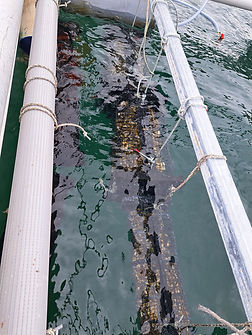
My mentor gave me a basket for oyster farming, and I immediately put in a single batch of oyster spawn and hung it on a raft offshore.
This raft uses the power of air to float and sink.
The baskets hanging from the frame are filled with a large number of baby oysters.
Normally, as shown in the photo on the left, the rafts are gently submerged in seawater, and twice a week for about five hours to allow the oysters to dry in the sun, resulting in strong and delicious oysters.
The farming period is 8 to 12 months, and they'll make their debut next season! (^^♪

March 20th. Today was the first time since we opened that we were incredibly quiet. 😢
Since I had some time, I took home one of the locally grown oysters that have become established and are thriving in the area this season to check what was inside.
Look at this amazing amount of fruit inside!
I tried steaming it with sake, and it didn't shrink, and the taste was reliably refreshing and rich with no unpleasant aftertaste!
Oysters that have grown strong and healthy, enduring the high summer temperatures.
Seeds grown locally are definitely stronger.
This is the result of simply providing a little help to help these oysters survive in the area where they are being cultivated.
These are encouraging test results for a new aquaculture method that we will be starting with this season's oyster farming.


March 7th: Made with new cheese, onions, tomato ketchup, and garlic with a delicious aroma, using large oysters from Ogatsu.
"Foil-baked cheese with a strong 'pungent' flavor" ¥660

March 5th: Baby oysters are being moved from raft to raft. The oysters that had been kept in cages since the end of the year have become delicious, so the local Shiozu oyster season will begin this weekend.
The waves were rough offshore today, so I'll go fishing tomorrow to try and break the waves.
![20260305_094630[1].jpg](https://static.wixstatic.com/media/ca7dfb_38bcd489d2ac43cbb8525767b37d4ffa~mv2.jpg/v1/fill/w_230,h_249,al_c,q_80,usm_0.66_1.00_0.01,enc_avif,quality_auto/ca7dfb_38bcd489d2ac43cbb8525767b37d4ffa~mv2.jpg)
March 2nd: I was on duty for tomorrow's shellfish toxin testing, so I went offshore and shucked oysters in the rain.
The meat content is excellent, but in some places over 90% of them die, which is really disappointing 😢.
This year, the shells are thicker and sturdier than usual, suggesting that the shells that survived the harsh heatwave from the Obon festival through September grew not larger, but thicker and sturdier, smaller than usual, with harder shells.
The size was smaller than usual for this time of year, but the inside was as delicious as always, and I devoured it raw on the water.
Just as I was thinking of starting to unwind all at once depending on the sea conditions, the forecast for tomorrow is for worsening sea conditions ⤵⤵⤵
Please wait a little longer, everyone.
February 19th: Prices rose, and shellfish poisoning was avoided, providing some relief for the time being.
Once the sea calms down, things are likely to get busy with the harvesting of local oysters for the year.

February 13th. 10°C is just around the corner.
It appears that tamales plankton are preparing to emerge in the soil.


February 2nd. It was cold again today.
The water temperature is 11°C, and it's getting close to 10°C.
The warnings about shellfish poisoning are gradually increasing.
We will inform you as soon as we receive any new information.
January 29th: Cold waves keep coming one after another, and the sea surface temperature drops to 11℃.
The oyster seeds are growing well, but it's almost time to issue a shellfish poisoning alert.
Wakayama Prefecture also regularly surveys the number of plankton in Tamarensa shellfish, and is always ready to conduct shellfish toxin testing.


January 20th: While the drop in seawater temperature is good news for oysters, it has fallen to 12°C today, raising concerns about shellfish toxins.
When temperatures drop below 10°C, tamales plankton emerge from the soil and produce shellfish toxins. Currently, no plankton have been detected in seawater tests conducted by the Wakayama Prefectural Fisheries Division, so there is no need to worry. However, depending on the water temperature, the emergence of plankton could affect oyster shipments from Wakayama Prefecture.
We will inform you as soon as the situation changes.

January 17th, the first day of the oyster festival, the weather was too good.
With the New Year's celebrations and the three-day weekend for Coming-of-Age Day, all the big events of January are over, and I'm sure everyone is exhausted.
Our customers were able to relax and enjoy their time at the shop until the very end.
On the right you can see my mentor's raw oysters!!
Unlike those from Wakayama, these are large, but they have a clear, clean taste with no unpleasant aftertaste.
The red scallops, a specialty of this season, and the garlic butter on the Sanriku Big Mussels are addictive! 🤤
We look forward to your visit.
![20260117_092516[1].jpg](https://static.wixstatic.com/media/ca7dfb_97b65db55f9642e58c9fe3e31f137efd~mv2.jpg/v1/fill/w_407,h_305,al_c,q_80,usm_0.66_1.00_0.01,enc_avif,quality_auto/ca7dfb_97b65db55f9642e58c9fe3e31f137efd~mv2.jpg)
![Screenshot_20260116_202425_Photos[1].jpg](https://static.wixstatic.com/media/ca7dfb_04dbc009f33b4b7fae56efe18a5af0cf~mv2.jpg/v1/fill/w_264,h_236,al_c,q_80,usm_0.66_1.00_0.01,enc_avif,quality_auto/ca7dfb_04dbc009f33b4b7fae56efe18a5af0cf~mv2.jpg)
![Screenshot_20260116_202419_Photos[1].jpg](https://static.wixstatic.com/media/ca7dfb_96a03824144f49cb8ce3deddb59ffb8c~mv2.jpg/v1/fill/w_265,h_224,al_c,q_80,usm_0.66_1.00_0.01,enc_avif,quality_auto/ca7dfb_96a03824144f49cb8ce3deddb59ffb8c~mv2.jpg)
The cold wave was really strong on January 15th.
It's extremely cold now, and the water temperature has dropped to 13°C.
Today, I've been fishing for longlines offshore all day long.
I tried my best to harvest oysters for the weekend, but unfortunately, they were damaged by the high temperatures last September. 😢
The ones that were bred a little later have been affected, but it's not too bad; however, their growth is quite slow and they are smaller.
But when you open it, you'll find it's quite plump and a virgin oyster that foreigners would love.
I'll leave it to my mentor this week and maybe have him make his live debut next week...
January 12th - The three-day weekend is over!
It was a calm but hectic three-day weekend due to the new menu.
I was really surprised by the extremely cold wind and snow on the second day.
With seawater reaching 14 degrees Celsius nearby, it seems like the fruit will start to fill up faster.
There are quite a few dead oysters, so we might not be able to prepare them in time for next week's oyster hut...
In that case, we'll have to change our plans at the last minute to attend my master's oyster festival!!
We will make the announcement two days in advance, so please check our website if you are planning to visit.
thank you.
R8.1.10
Today is our first business day of the new year.
Thank you to all the customers who came.
I'm delighted that we had such a great start to the first day.
We look forward to welcoming many more visitors tomorrow and beyond.
![20260110_125934[1].jpg](https://static.wixstatic.com/media/ca7dfb_45a19f1e168b4214871625067fa53066~mv2.jpg/v1/fill/w_328,h_246,al_c,q_80,usm_0.66_1.00_0.01,enc_avif,quality_auto/ca7dfb_45a19f1e168b4214871625067fa53066~mv2.jpg)
January 1, 2026. Happy New Year!
This year, all of our staff will work hard to cultivate delicious oysters and make our oyster hut a place you'll want to visit again.
Please support me.
All staff at Tatei Suisan
December 29th It's here! 15℃
This is the water temperature.
I've been waiting for this; the oysters' growth will accelerate dramatically.
The oyster spat brought in in September usually doubles in size by December, but this season, until the first half of December, they hadn't grown even a millimeter, which made me quite anxious.
The shells started growing about two weeks ago, and I have high hopes that the contents will become delicious.
Today marks the end of the year, and work will resume on January 3rd.
Thank you for everything over the past year.
I look forward to working with you again next year.

December 26
I've been had! 😢
The second installment is mind-blowing.
Even so, this is a less severe scratch than the first time.
The tent canopy is in this state due to the strong winds from yesterday.
I immediately ordered a new tent. Our last day of business on the 28th will be on a smaller scale...
Please come in time for the first business day of the New Year's three-day weekend on the 10th!!!

December 25th. Yesterday evening, I went to check on the growth of the oysters.
It's growing!
Both the oyster spat and the oysters we'll be selling at our oyster huts this season!!
With that much growth, we can expect great things from the content as well .
December 21st. The weather was bad today.
The restaurant next door has started offering a "greedy set" this season.
It gets colder as the day goes on, especially in the evening ⛄
The seawater temperature rose to 16°C, and the seeds began to grow rapidly.
With seawater reaching 15 degrees Celsius nearby, their growth should begin rapidly.
We want to start an all-you-can-eat service when we open after the New Year!
![20251221_114421[1].jpg](https://static.wixstatic.com/media/ca7dfb_c543df56a9bb48e9b9466d4237caf562~mv2.jpg/v1/fill/w_457,h_265,al_c,q_80,usm_0.66_1.00_0.01,enc_avif,quality_auto/ca7dfb_c543df56a9bb48e9b9466d4237caf562~mv2.jpg)
Greedy Set
12月19日
遠かった。
宮城県から和歌山へ1100キロ、給油とトイレ以外はノンストップの一人運転で走り切りました。
昨日の昼の11時に出発し到着は3時半の16時間半!!
還暦の年にこれはきつかった~(^^♪
クレーンが待ってるので早速港に行き船を下ろしてエンジンを取りつけてもらい。
エンジンを試し掛けし、あとは機械屋さんにメンテナンスしてもらって出来上がり。
これからは和歌山の海で一緒に働いてもらいます。


On December 17th, the sea surface temperature in Hainan dropped to 17°C.
With temperatures reaching 16°C very close by, it looks like the fruit set will accelerate rapidly.
I'm currently in Miyagi Prefecture to pick up the boat.
To transport by truck, make it as compact as possible.
The engine was removed, placed on a pallet, and secured.
Tomorrow morning, I'll go to the Ishinomaki Police Station to get the necessary permits for loading the boat, then load the boat onto a truck and head to Wakayama.
For your second life, please do your best with us by the sea in Wakayama! 🎶

The season started on December 13th.
Thank you to all the customers who came to Tateyama Fisheries Hama's oyster hut on its opening day today.
Our entire staff will be open for business tomorrow, and we look forward to your visit.
![20251213_121411[1].jpg](https://static.wixstatic.com/media/ca7dfb_80fce2d5941d4c4480def5975c95ccba~mv2.jpg/v1/fill/w_179,h_172,al_c,q_80,usm_0.66_1.00_0.01,enc_avif,quality_auto/ca7dfb_80fce2d5941d4c4480def5975c95ccba~mv2.jpg)
![20251213_122031[1].jpg](https://static.wixstatic.com/media/ca7dfb_2b494655f3ab4e43899965eaa10365eb~mv2.jpg/v1/fill/w_169,h_179,al_c,q_80,usm_0.66_1.00_0.01,enc_avif,quality_auto/ca7dfb_2b494655f3ab4e43899965eaa10365eb~mv2.jpg)
![20251213_121947[1].jpg](https://static.wixstatic.com/media/ca7dfb_9db6d984a9f04623ba3a27dcd162d9af~mv2.jpg/v1/fill/w_206,h_178,al_c,q_80,usm_0.66_1.00_0.01,enc_avif,quality_auto/ca7dfb_9db6d984a9f04623ba3a27dcd162d9af~mv2.jpg)
December 10th: The oyster hut is complete!!
On Fridays, we prepare all the menu items and have a tasting session with the staff.


On December 7th, the sea surface temperature finally began to drop steadily.
The oyster hut finally looks presentable from the outside.
With Hata-san and myself, and the addition of our reliable helper Sho-chan, we were able to make great progress today as a group of three.
Tomorrow, we'll be installing water taps, creating the entrance, and reinforcing the windows of the seating area tents so that you can enjoy your meal at the oyster hut even on windy or rainy days.
The photo below shows wakame seaweed seeds.
The first batch of seeds disappeared because the seawater temperature rose after planting, so we're replacing them with these well-grown seeds.
The oysters will be ready for shabu-shabu around mid-January and will be available at the oyster hut, so please look forward to it.


December 3rd. These are the seeds for this time.
My mentor carefully selected and brought me these plump, richly packed seeds from the offshore shelves.
thank you.
Grow up healthy and strong!

November 21st. Drones are useful. They show you exactly what you want to see without having to dive. This year's seeds are doing well.
This is a bed for baby oysters underwater. The ghost photo is of Mr. Hata piloting the drone.

November 12th. Today's temperature is 21 degrees Celsius, and it's starting to drop steadily.
When the temperature drops below 20℃, the oysters become significantly more delicious.
The time for planting seaweed seeds is approaching.

November 6th, Today's sea surface temperature: 22℃
It has started to decline steadily.
If the temperature drops below 20 degrees Celsius soon, we might be able to serve delicious raw oysters in December...
November 5th: The water temperature is not dropping much, but it's currently 23 degrees Celsius, with the temperature dropping close to 22 degrees.
If temperatures stay below 20 degrees Celsius at this rate, the season will be just around the corner.

On October 20th, we experimentally used underwater dorons to manage oyster growth, and it was deemed acceptable. Therefore, we decided to entrust the underwater management to Kai, a company specializing in underwater surveys.
This drone, with its proven track record in chasing, will be a powerful ally going forward.

October 15th: Temperatures are approaching 24°C. The sea surface temperature is starting to drop steadily this season, which is very promising.

June 17
The seawater temperature is within the ideal temperature range for oyster growth, resulting in creamy oysters that fill their shells completely.
Ovulation begins when the temperature rises to 24 degrees Celsius, so we will preserve them in their best condition for the next month and release them at the end of the year.
The revived Futapori will also be available in limited quantities (^^♪
Enjoy the ultimate creamy oysters at the end of the year.
May 5th Thank you for using Hamano Oyster Hut Tateyuki Suisan again this season.
We, the entire staff, would like to express our sincere gratitude.
We are making good progress with oyster farming for the next season.
We will do our best to deliver delicious oysters to everyone as soon as possible, so we appreciate your support.
Thank you very much. (From all the staff)
April 24th: Tomorrow morning, we'll load the equipment and head to the Susami roadside station!
The two young people are in charge of Susami (^^♪
Since these two are trustworthy enough to run the oyster hut in Shiozu, I'll send them off with a smile.
Have a great first Golden Week!
Oyster okonomiyaki in a grilled cup,
Large size, 2 pieces included.
Enjoy some oysters during peak season as a stop on your drive.
The photo shows three plants.
April 10th Today we harvested wakame seaweed that was cultivated in the open ocean!
The leaves are thick, the female plants are large and have sturdy stems, making them perfect for tsukudani (simmered in soy sauce) or oden (Japanese hot pot) 🎶
We will be selling oyster plants, approximately 2 meters tall each, for the bargain price of 200 yen at our weekend oyster hut.

March 22
The oyster hut is already set up for spring! (^^♪
With the curtain on the ocean side half-down, ventilation is excellent, and we can see the blue sky and the sea. Today's top menu item is oyster okonomiyaki, packed with oysters!!
Tomorrow, we'll have a secret menu item: oyster rice with lots of oysters...
If it's not on the menu, please ask!
March 15th This season, a fryer has been installed in the oyster hut, and one of Kakihachi's popular items, "Jumbo Shrimp Tempura,"
Added to the menu.
The shrimp alone are quite large! 🎶
Oyster tempura is also delicious.

February 6th. It's been quite windy since this morning, making work near the longline area impossible even with a small boat.
We've got our fryers in stock, and we'll be reopening our tempura menu this weekend! (^^♪
Although we're open fewer days this season, the quality of our oyster hut, which we haven't visited in a while, is improving week by week!
On February 4th, it rained in the morning but stopped in the afternoon, so we prepared oysters using longlines offshore for an event in Wakayama City that will be held over the weekend.
It was surprisingly calm and over in no time.
At the oyster hut this weekend, the fryer is ready so we'll be making oyster tempura and
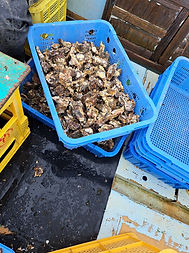

March 3rd. Good morning.
March has arrived, and today is Hinamatsuri (Girls' Day) 🎎 Spring is coming! 🌸
There's a slight variation in size depending on the shelf.
You can tell the difference just by a one-month difference in when the seeds were planted.
One month makes a big difference for oysters that have been around for a year!
This season, we've gained a strong and reliable helper, and I'm really looking forward to the period in late July and late September, when the lingering summer heat is still intense, as these are crucial times that determine the growth of the oysters.
February 24th, the last day of the three-day weekend, saw many customers visit us.
thank you very much.
I took a picture with today's customer's permission 📷
Everyone's smiling, but it was a serious competition until they turned to face the camera (lol).

February 23rd. Thank you for the sold-out show today.
We're running low on the oyster tsukudani (simmered oysters) for our oyster tsukudani rice balls, so I'm hastily cooking more late into the night.
I'll do my best to take care of it so that it tastes delicious.


February 22nd, the first day of the season. Thank you to all the customers who came.
The opening time was moved up by 30 minutes.
The restaurant was almost full first thing in the morning, but after 11:00 AM, there were noticeably more empty seats, allowing us to attend to customers at a more relaxed pace.
It was a bit nerve-wracking starting out in a tent after a long time, but I had a wonderful day.
thank you.
It was finally completed on February 15th.
The oyster hut on the beach is back!!
We will be opening the shop for just one hour today, the 15th, starting at 12:00 .


February 11th. Those memories came flooding back!!
The entrance is in a different location than before, and the arrow is on the opposite side.
If things continue like this, no one will come even if we open! (lol)


February 10th: Things are progressing smoothly.
The ocean side is finished, and for the mountain side, I went to buy sheets for the windows but ended up buying something else, and forgot to buy something important. The table is finished and it's gradually starting to look like an oyster hut.


February 9th Today, two of us started building the oyster hut, and one more joined us in the afternoon, making a total of three!
We made progress! (^^♪
The entrance and reception counter are gradually taking shape, and we're working towards our goal every day...

February 8th. We're building the oyster hut, but one of the structural beams got slightly bent in yesterday's strong winds. 😢
It won't bend anymore!
We've reinforced the structure properly and started installing the plywood on the walls smoothly.
Today I was alone, but tomorrow I'll have a reliable helper joining me.
I'm looking forward to moving forward! (^^♪

February 2nd
Sorry to keep you waiting.
Hamano Kakigoya Tatei Suisan is set to open on Saturday, February 22nd at 10:00 AM!!
The strong northerly winds are tossing the oysters on the longlines offshore with the waves, which should be helping them fill with delicious meat.
I tried it two days ago as a test, and it tasted the same as usual—sweet.
Let's have you gain some weight for the next three weeks.
Let's get those oysters to shrink even when grilled!
It's very windy this week, so I'll start setting up the tent next week, taking the wind into consideration.
January 23rd: Two consecutive days of clear skies and calm seas! (^^♪
We've been having lovely, warm days lately. I've been working on shucking oysters using longlines.
The shell size is better than last year, but the meat hasn't grown as much. Some of them look like they're from October.
There were many specimens that were so small I couldn't believe my eyes, and some were good, but I tried cooking one three days ago and it shrunk so much that the meat was way too small!!
Those who sample our oysters exclaim, "Delicious!!" However, while Tateyama Suisan's oysters are small in size, their selling point is their large, plump flesh.
They are kept individually in cages, where they can grow freely in depths rich in plankton, swaying with the waves and accelerating their physical growth.
We apologize for the long wait, but please bear with us a little longer.
January 19th *Breeding for this season The seawater temperature has dropped and growth has started smoothly.
*Removing barnacles from longlines: If these aren't removed, the thick longline ropes will rub against the growing, larger barnacles, and one of them broke this season. 😢
*Checking the growth of longline oysters: We've been checking them at different points.
They've grown rapidly, are quite large, and are starting to bear fruit well.
Now all that's left is to wait for it to gain weight!
*Checking the oysters in the basket: They look good, the size is as planned, and the meat is starting to improve, so now all that's left is for them to get plump.
The weather was nice, so I did a lot of things.
Tomorrow we'll be repairing the broken parts of the longline.
Happy New Year on January 15th!
We submitted oysters from offshore for the first shellfish toxin test of the year.
At the same time, I checked on the oysters' growth with hopeful anticipation. 😢
The points for oysters vary between the left and right sides; usually, the oysters on the right side develop first, followed by those on the left. However, this season it's the opposite; the first batch of oysters is developing very slowly, which is causing a delay in the opening of the oyster hut.
The oysters will be perfectly ripe in about two weeks...
The shells are growing well, so once the rough seas calm down, we'll head out to sea and start the dismantling process.

December 28th Today's sea surface temperature: 15℃
The water temperature finally feels like winter has arrived 🌡
This is the temperature at which the fruit begins to develop its delicious flavor.
Wakame seaweed cultivation has been underway since before January, but its growth is slow.
There are complaints about slow speeds in other areas as well...
Rising sea temperatures and the meandering of the Kuroshio Current are gradually destroying the oyster paradise that existed when we first started experimental oyster farming.
We have to go through a lot of trial and error and change our oyster farming methods every year, which is a real challenge...
This year's disappointment is the complete failure of all the snails that were bred after spring. However, the ones bred at a different time are doing great!!
It's a learning experience every year!!!
The oysters are currently in the state shown in the photo from the 15th, and are being transformed into the oysters that can be held in the hand. We apologize for the long wait, but please be patient.

December 15th
While I was planting the oysters, I also checked on their growth.
Things have improved somewhat, but it will still take some time before we can deliver the kind of content that our customers look forward to every year.
Yellowtail caught in Toyama are now being caught in Hokkaido, and squid that used to be caught in Okinawa are now being caught off the coast of Miyagi. The seas around Japan have become much warmer.
For the past three years, the start of the oyster season in Wakayama has become a regular occurrence, beginning right after the New Year.
At this rate, it might be February.

November 30th: Today we carried out new seeding work in preparation for next season.
They've finally started to grow! The translucent, very thin shells you see in the picture are adorable. ♪
This is a first! It took a month and a half for the seeds I brought back from Miyagi to start growing in Wakayama!!
Because the seeding was delayed, the oysters we're releasing this season are also growing slower. 😢
It's finally starting to get cold, so I hope things will go smoothly.

November 25th: They've started to fill in, but there's a huge difference, and even the ones that are filling in are still not quite there.
I tried them, but it seems it will still take some time before they're as good as usual.
Grow big and delicious oysters!

November 10th: This is one of the processes of separating the fruit from the clump to improve growth speed and fruit yield.
After this, we will separate them by hand and switch to cage cultivation. The seawater temperature is not dropping down, so the fish are not yet fully developed, and we are prepared for the earliest we can open is the end of the year, or even after the New Year.

2024,9,25
This is an update on the oyster growth for next season.
The shell size is just right 💗
The seawater temperature is still high, so the yield is still low. But once the seawater temperature drops, we can expect a big harvest!
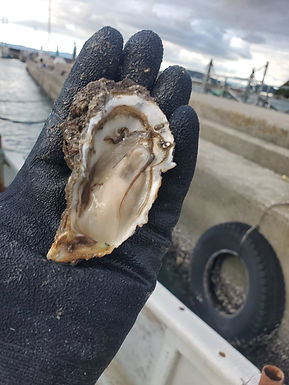

April 17th: Large oysters, suitable for raw consumption, that could not be served during business hours due to a norovirus outbreak.
We will be selling them during Golden Week.

It arrived on February 22nd!!
These oysters are from my mentor, Okumatsushima.
These oysters have been cultivated for four months longer than mine, and they are grown in water about twice as deep as here, nurtured in a gentle yet rough environment.
I'll be participating in the master-apprentice taste test that starts tomorrow.
**Master's Oysters** 1 kg 2750 yen
**Taste Comparison Set (1 kg each)**
Total 2 kg, 5000 yen

2月19日
かきの水揚げ手順
かき小屋で使う牡蠣1日分を2日かけて準備します。
Lifted out of the water by machine
The machine is used to detach the ropes and crush them.
It comes out roughly when you wash it out.

Separate them one by one and remove the barnacles.

After this, we head to the oyster hut for the final washing.

February 14th: I received the shellfish toxin test results today.
The result was a beautiful ocean.
With the seawater temperature dropping, the oysters are growing exceptionally well and are starting to get bigger and bigger as we head towards March.
We've had so many customers this season that I'm a little worried about whether we'll be able to stay open until Golden Week.

2月10日
これ味噌汁や鍋で食べるとうまいですよ。
漁師仲間で底引き専門のまこっちゃんが捕ってきました。

On February 2nd, these baby oysters were transported for 40 hours, covered in snow, and wrapped in sheets, after traveling along this highway.
It's a different sea from the north, but tonight they're probably resting peacefully in the sea off Hainan.


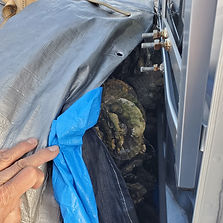
January 29th. The new year has begun, and it's already the 29th. Time seems to pass faster the older you get.
The oysters we are cultivating grow at a speed that matches this rapid pace.
The eggs were planted in April, and the cultivation period has now been 10 months. In about half a month, it will be our turn to ship them.

January 28th. It's been exactly one month today.
The seaweed seeds, which were only 5 centimeters in size, have grown this big!
Incredible growth for Spade!!
We're going straight to the kitchen for shabu-shabu!
It smelled great and tasted delicious!

On January 26th, the results of the shellfish toxin test arrived from the Wakayama Prefectural Fisheries Division.
The oysters that Tatei Suisan provides at Kakihachi are perfectly fine and delicious.

On January 23rd, while on my way to Miyagi to collect new seeds for the second time, I was told that the weather forecast for tomorrow would be terrible, so I changed my plans to next week.
The journey there is fine, but it seems the boat going to collect the seeds is in a really rough sea, so it's dangerous!
Even if I could go and pick them up, the daytime temperature on the way back would be below freezing and too cold, causing the seeds to freeze and be ruined!
I'm currently passing through Nagano, but I've decided to stop by a hot spring to warm up before heading home.


January 17th. The best oyster of the season. My gloves are size XL, and these are special oysters, much larger than the large oysters used for eating raw.
They are being treated specially and kept in cages offshore.
It might be available at Kakihachi soon.


January 16th: As food safety is paramount, shellfish toxin testing begins at this time of year.
Based on the water temperature, it's still fine, but we'll use the oyster meat itself to send it to the testing facility.
All oysters served at Kakigoya Kakihachi are raised in the clean waters of the Kii Channel outside the harbor, so they are completely free of shellfish toxins, with zero detection of paralytic or diarrhetic toxins.

January 11th: The sea surface temperature is 14 degrees Celsius, and seawater at 13 degrees Celsius is approaching nearby.
The index is showing promising results and is in good condition.
We used to lift the longline with a machine to check the oysters we were shucking each time, but we've introduced a new weapon!!
It's helpful that we can check the boat with a small outboard motor before attaching it to the longline.

On January 6th, I opened a rock oyster for the first time in January, and it was full of meat!

January 2nd. Happy New Year!
I couldn't see the first sunrise of the year, but here's my first view of Mt. Fuji in the evening.

December 29th, it's finally 15℃ today.
The Milk Festival will begin soon.
We went offshore to put up protective nets for the rafts of young shellfish.
While fishing for pufferfish and filefish, the culprits that eat young shellfish and cause damage, you might also catch horse mackerel and hairtail as a bonus!
Hata-san, Hocchan, and Rina will share it all and it will be delicious.
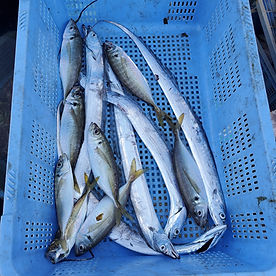
On December 28th, I received a call from Makoto-chan, who was returning to port from offshore, saying that there were shrimp (red-legged shrimp) available, so I went to the fishing boat that had just arrived in port to pick up the ingredients for our special New Year's menu.

December 26th Today's seawater temperature is 16℃ and is steadily starting to drop. We're hoping the fish will grow well so we can open on January 5th.

December 15th
Today's sea surface temperature: 17℃
It's mid-December, but the temperature is way too high.
I hope the weather from the day after tomorrow will be favorable and help the oysters grow!
I'm also considering planting seaweed seeds, and I'm keeping a close eye on the weather so I can do it on a day when my hands are numb with cold.
December 7th
The oysters we have today are not very plump because the seawater temperature was high until recently, and they shrink when cooked.
Today's sea surface temperature is 18℃.
The water temperature has finally dropped to the point where the fruit can begin to grow, so I'm looking forward to seeing what happens next.

On November 30th, the sea surface temperature finally reached 19 degrees Celsius.
From here on, it's not the shell that we've been waiting for, but the body that grows.
Once the temperature drops to 16°C and waits for about two weeks, the fruit will be ready for shipment!
It's still a long way off, but we're starting to see a glimpse of the finish line.
November 20th. Today's water temperature is 20 degrees Celsius.
It's still going to take a while.
When we raised the juvenile scallops that had detached from their shells during the mating process in a cage, their shells grew rapidly.
Oysters develop their shells before adding their meat, so when they are young oysters, they eat a lot and grow bigger day by day.


On November 6th, the sea surface temperature was 22°C and is steadily decreasing.
The oysters currently have a bit more meat in them, and are less milky and have a clear appearance.
The lovely feeling will increase once the temperature starts to drop below 18℃, so please wait a little longer.

On October 25th, I immediately separated the seeds from the first batch of this season and planted them, and they were successfully eaten.
Almost completely wiped out 😢
Despite being inside a protective net, we investigated the cause.
Oh no!! The net was torn.
Starting tomorrow, we will begin the second phase of countermeasures, which is aquaculture.

October 20th. It's finally starting to feel like autumn, and the sea temperature is 23 degrees Celsius!!
That's great!
The first batch of seeds for this season also arrived from Okumatsushima Fisheries in Miyagi Prefecture.
This marks the start of primary conservation aquaculture.
The seeds introduced to Miyagi at the end of last season were mistimed when the water temperature rose in the summer, resulting in 80-90% of them dying, but otherwise, things are going smoothly so far.
I hope these oysters become delicious soon! (^^♪


On October 11th, the long-awaited sea surface temperature finally dropped below 25 degrees Celsius.
The oyster growing season is starting again.

October 6th. The sea surface temperature, which had risen to 30 degrees Celsius again in September, has finally begun to drop, reaching 26 degrees Celsius today.
The oysters that have been taken out to sea should grow steadily towards the end of the year.

As of August 27th, the sea surface temperature in the Kii Channel is low at 27.7℃, lower than usual, due to the Kuroshio Current meandering and separating the currents. Thanks to this, the oysters offshore are growing well, and we are looking forward to the start of the season.

On June 11th, the Kuroshio Current changed from a week ago, and warm seawater began to flow into the Kii Channel, causing the water temperature to rise rapidly. This is likely to accelerate the spawning season and shorten the season considerably.

6月9日
週末用新規の岩牡蠣
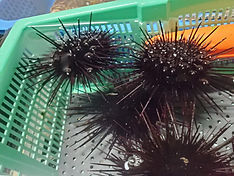
そして、ウニをゲット!!
身はまだ小さいが味は超濃厚🎶
本日水温20度
早とちりな牡蠣が産卵を始めました。
深い所でも同じ水温だったので今シーズンの
産卵は少し早いかも。。

May 25th
I harvested some oysters from offshore and some rock oysters. A big catch after a long time!!
All the photos on the left are of big names .
Super-sized oysters are available in limited quantities at Kakihachi this weekend!


May 1st: The weather was fine and the sea was very calm.
I've been busy shucking a lot of oysters caught using longline fishing methods offshore, in preparation for the latter half of Golden Week.
The size has increased, and the contents taste great too!!
My neck is so sore from sunburn 😿

On April 23rd, I tried making dried wakame seaweed.
When thoroughly dried, it changes from a brownish color to a deep green, but it will crack and break if not handled gently.
I took a small bite and it was delicious with just the right amount of saltiness.

April 20th: Today we harvested rock oysters and wild wakame seaweed.
Weekend at Kakihachi.

On April 14th, I went oyster fishing for the first time this season.
I have to dive in and pick them up one by one, but it's so cold!
It's covered in natural seaweed, and there are no oysters to be seen!
While gathering seaweed, I managed to get a few oysters♪
Let's try one.
Great yield and great taste!


It finally arrived on April 4th.
I sent it in for testing in January, and I understand that the results are thorough, but it's taking a bit too long.

.jpg)
March 3rd: Shellfish toxin test results: Below the detection limit, there is no concern about paralytic shellfish poisoning.

February 24th: I selected some small oysters from the ones I harvested offshore yesterday and shucked them to check what was inside.
Good profit!
It tastes better as shellfish than oysters!
They're growing up exactly as I intended.


February 22
After checking the oysters in the basket, we've finally made it this far. If we take them out of the basket now, all the shells that have grown will break and they won't be able to grow big, so we have to be patient! If these shells become real, the meat will grow big too!!! Tomorrow we'll be able to go out to sea for the first time in a while, so we'll head to the longline oyster farm that we've been eyeing for a while.
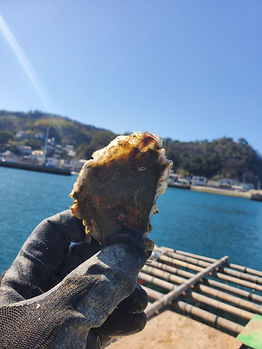
On February 7th, I drove 2400 kilometers round trip to Matsushima.
In the northern regions, snow walls abound ⛄
We arrived in Wakayama and immediately headed into the sea.


On February 1st, we received the shellfish toxin test results from Wakayama Prefecture.
The report indicates that the levels are below the detection limit and therefore not problematic.
For now, that's a relief. The seawater temperature is low because it was measured at the surface due to the very cold weather.

January 20th: The contents are perfect, the taste is great, but it's so big that it sits on the second shelf.
She'll be eight months old in about a month and a half, so she's a good size.
If we run out of stock, we apologize to our customers who have made reservations, but you may have to wait until we have more available.
It's frustrating that nature is something we can't control no matter how hard we try.

2023.01.12
Today the sea was perfectly calm, allowing us to slowly harvest the oysters while observing their growth.
We've already found a oyster circle!!
There are three of them, but I'll carefully put them in a basket and hope they grow big and delicious in the water with lots of plankton at a good depth.

December 29th: Because the seawater temperature was high during the summer and didn't drop until near the end of the year, the oyster shells are smaller than usual this year, but the insides are perfect and the sweetness is great!!
Processing for raw consumption has begun.
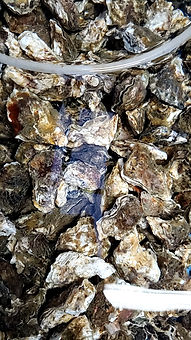

December 23rd. The countdown to Christmas has begun.
The oysters are ripening nicely, and the countdown to opening has begun.
We've decided to open on January 3rd at 11:00 AM for the New Year's holiday.


November 28th: The harvest has finally started to pick up a little, which is very promising, but it looks like Kakihachi's opening will still be delayed.


On October 8th, I drove 1200 kilometers one way in my trusty mini-truck to Okumatsushima to pick up the first seeds of the season.
I saw the license plate and came running, and I was surprised but burst out laughing.
I was provided with some really good seeds, and when I got back, I took the first step of preventing damage from pests and then started planting the seeds one by one. It wouldn't be finished in a day, so I soaked the seeds waiting their turn in seawater and left them there for a while.
I'll do my best to produce delicious oysters again this season.
This season, there have been many cases of oyster deaths and delayed growth across the country, and Shiozu is no exception. As a result, we will be temporarily suspending our all-you-can-eat oyster service throughout December.
The start of the all-you-can-eat event may be slightly delayed depending on the availability of oysters.
Instead, we're launching a new menu item: the "Greedy Set," which includes lots of oyster dishes.
Business hours: December 13th, 14th, 20th, 21st; January 10th, 11th, 12th, 17th, 18th, 24th, 25th, 31st
Golden Week Oyster Hut Menu
Opening hours: 10:00 AM - 3:00 PM (closing time)
* Bringing in outside food and drinks is not permitted.
** Due to a mass death of oysters in Miyagi Prefecture and significantly poor growth, shipments from my mentor have been suspended.**
* All-you-can-eat grilled food
All-you-can-eat oysters from Shiozu, Wakayama Prefecture and Miyagi Prefecture: grilled oysters (Wakayama and Miyagi), oyster tempura, oyster pancakes, oyster okonomiyaki, and miso soup of the day.
One complimentary bottle of tea or water.
60 minutes ¥3,980 (¥4,290)
Sales will be suspended in December.
_edited.jpg)
* All-you-can-eat orders are placed per group/table. * Leftover food will be charged to the customer. * Last orders are taken 15 minutes before closing.
Individual serving *Grilled Oysters * Shared per table
Oysters from Shiozu, Wakayama Prefecture (Oysters from the apprentice)
Ball (approximately 1 kg)
(In-store) Wakayama ¥2,700 (¥2,970)
(Takeaway live fish ) Wakayama ¥2,500 (¥2,700)
*Oysters from Okumatsushima, Miyagi Prefecture (from my mentor)
( Sales discontinued in December )
Ball (approximately 1 kg)
(In-store) Miyagi ¥2,600 (¥2,860)
(Takeaway live fish) Miyagi ¥2,400 (¥2,590)
* A set for comparing the tastes of the apprentice (Wakayama) and the master (Wakayama).
( Sales suspended in December )
1 kg (Wakayama) + 1 kg (Miyagi) = Total 2 kg
(In-store only) ¥5,300 (¥5,830) ⇨ ¥5,000 (¥5,500)
New menu for this season
[A must-see for oyster lovers! Enjoy the bounty of the sea to the fullest!] has arrived!
We've gathered together the most popular dishes from our oyster hut to satisfy your request for "a variety of flavors!"
\A luxurious plate available in limited quantities!/
Greedy Set ¥2,980 (¥3,270 including tax)
You can compare grilled oysters, two from Shiozu and two from Miyagi, and also enjoy tempura, oyster pancakes, oyster rice, and the miso soup of the day!
One bottle of mineral water is included.
* Replace 2 Miyagi oysters with 2 Shiozu oysters.
**Due to delays in the development of raw oysters, sales will be suspended throughout December.**
**We have obtained a fresh fish sales license and have started selling raw oyster packs!**
* Raw oysters
1 pack (2-3 pieces) ¥700 (¥770)
* Oyster rice pilaf ¥600 (¥660)
* Oyster pancake ¥500 (¥550)
* Oyster tempura ¥900 (¥990)
* Oyster Okonomiyaki ¥900 (¥990)
Half portion: ¥500 (¥550)
* Local Octopus Tempura ¥900 (¥990)
...Only when there is octopus fishing and it is in stock.
* Shrimp and small fish tempura ¥900 (¥990)
* Fish tempura of the day ¥680 (¥740)
(Drinks) ** Bringing your own drinks is not allowed.
Canned beer 500ml (550ml)
Highball 400 (440)
Chuhai 400 (440)
Non-alcoholic beer 400 (440)
Juice 300 (300)
Tea 250 (270)
Water 150 (160)
* You are welcome to bring your own condiments (only ponzu sauce is provided).
* Bringing in outside food and drinks is prohibited.
* Please use the free parking lot of Tateyama Fisheries located in front of the oyster hut.

Oyster hut at Tatei Suisan Hama

August 11th: The rock oysters are also perfectly prepared for the Obon weekend.
Currently being purified with 2500 liters of sterile seawater per hour!
Spawning began in the shallow waters on July 1st.
Depending on the condition of the oysters, sales of Pacific oysters for this season may be coming to an end.
The rock oyster season will continue until mid-August.
Sunday, June 26th
The surface seawater temperature in the aquaculture area has reached 23 degrees Celsius.
The seawater temperature at depths greater than 2 meters is about 2 degrees lower, so the fish haven't spawned yet, but it's uncertain when the temperature will rise and they will start spawning.
June 10th (Friday)
Pacific oysters begin spawning when the water temperature reaches 23-25°C.
The seawater temperature in the Tateyama Fisheries Aquaculture Area today is 21℃.
The spawning season is getting closer day by day.
This season's supply of virgin oysters from Tateyama Suisan is nearing its end.
Now it's just a matter of keeping a close eye on the sea surface temperature.
Sunday, May 29th
As the season nears its end, the size and creaminess are steadily increasing.
Enjoy our raw oysters, which melt in your mouth, with lemon, Tabasco for a refreshing kick, or ketchup to enhance the sweetness and umami.

April 23rd, First Longline
The overall size of the fish increased after we started catching them early in the morning.
There are quite a few of this size mixed in there now.
The return on investment is undeniably good.

April 15th, Longline catches #1 & #2. Look at those big adductor muscles! Proof they're sweet oysters.

March 23rd: First longline-caught oysters
They survived the pest damage and continued to grow.
It's quite plump, so I've already started preparing it for raw consumption.
I'm looking forward to oysters around Golden Week.

April 11th: Shellfish toxin test results
The shellfish toxin test, which is conducted regularly, came back clear.
The water temperature is 16℃
Now that they've moved onto the platform, it seems the tamales plankton that produce shellfish toxins have also disappeared.


3月17日貝毒検査結果
貝毒プランクトン数と検査機関の結果です。
プランクトンは0で、貝毒も検出限界以下でした。
February 26th 💗 Rock oysters & rock oysters


We got these during longline maintenance in preparation for planting oyster seeds next season!!
This is the size of a wild seed that grew to about two years after being attached to a rope for securing it.
It grows well here! And the taste is perfect!!
Once the sunfish season is over, I'd like to serve it at Kakihachi.
February 5th
It is growing steadily.
Both the size and the feel are a step up.
As for the taste, it's sweeter.


January 3rd
The virgin oysters are of good quality.
The sweetness and flavor will increase even more once the water temperature drops a little more.